Not long ago, technology modernization was often pushed to the bottom of the priority list. If systems were still running and employees could get their work done, many organizations chose to delay upgrades and focus on other business needs. That approach is becoming harder to justify.
Today, technology affects almost every part of an organization. It influences how employees collaborate, how customers receive service, how decisions are made, and how quickly a business can respond to change. When older systems begin slowing those activities down, the impact is no longer limited to the IT department. It becomes a business issue.
Many organizations are finding that aging technology creates challenges that aren’t always obvious at first. Teams spend extra time working around system limitations. Information lives in different places, making it difficult to get a complete picture of the business. New software takes longer to implement because it has to fit into an environment that was never designed for today’s demands. Over time, those small frustrations add up and begin affecting productivity, costs, and customer experience.
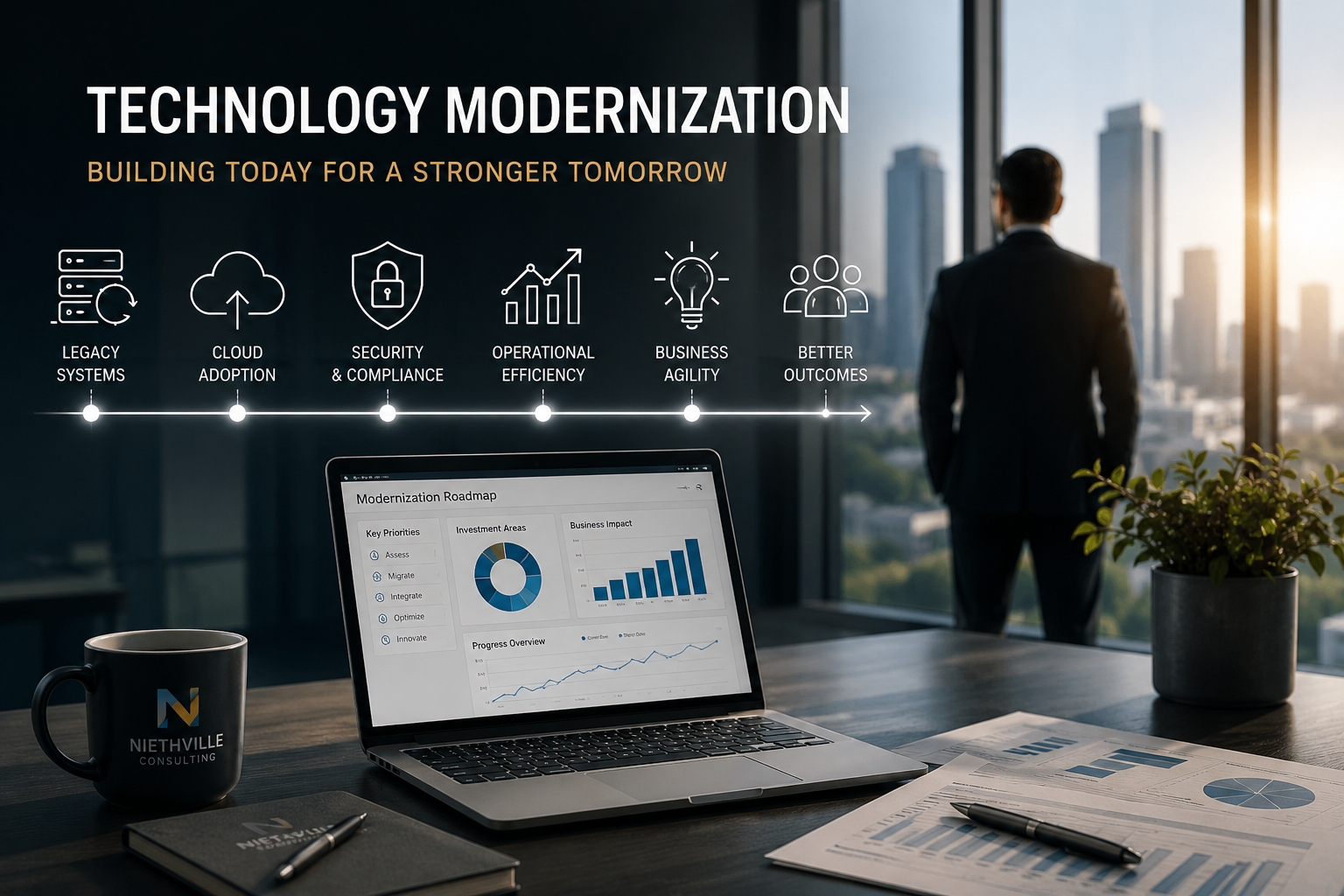
Modernization does not mean replacing everything at once. In fact, that is rarely the best approach. The organizations seeing the strongest results usually begin by asking practical questions. Which systems create the biggest bottlenecks? Where are employees losing time? Which investments will deliver the greatest business value over the next few years? Those answers help shape a roadmap that is realistic, affordable, and aligned with business goals.
Another important shift is the way executives think about modernization. It is no longer viewed as a technical upgrade for the IT team to manage on its own. Finance leaders see the cost of maintaining outdated systems. Operations teams feel the impact of inefficient processes. Human resources notices when employees become frustrated with tools that make everyday work more difficult. Modernization has become a shared business conversation because its benefits and its challenges reach every department.
Technology will continue to evolve, and organizations cannot predict every change that lies ahead. What they can do is build an environment that is easier to adapt, easier to secure, and better prepared for future opportunities. That starts with making thoughtful decisions today instead of waiting until aging systems force the issue.