
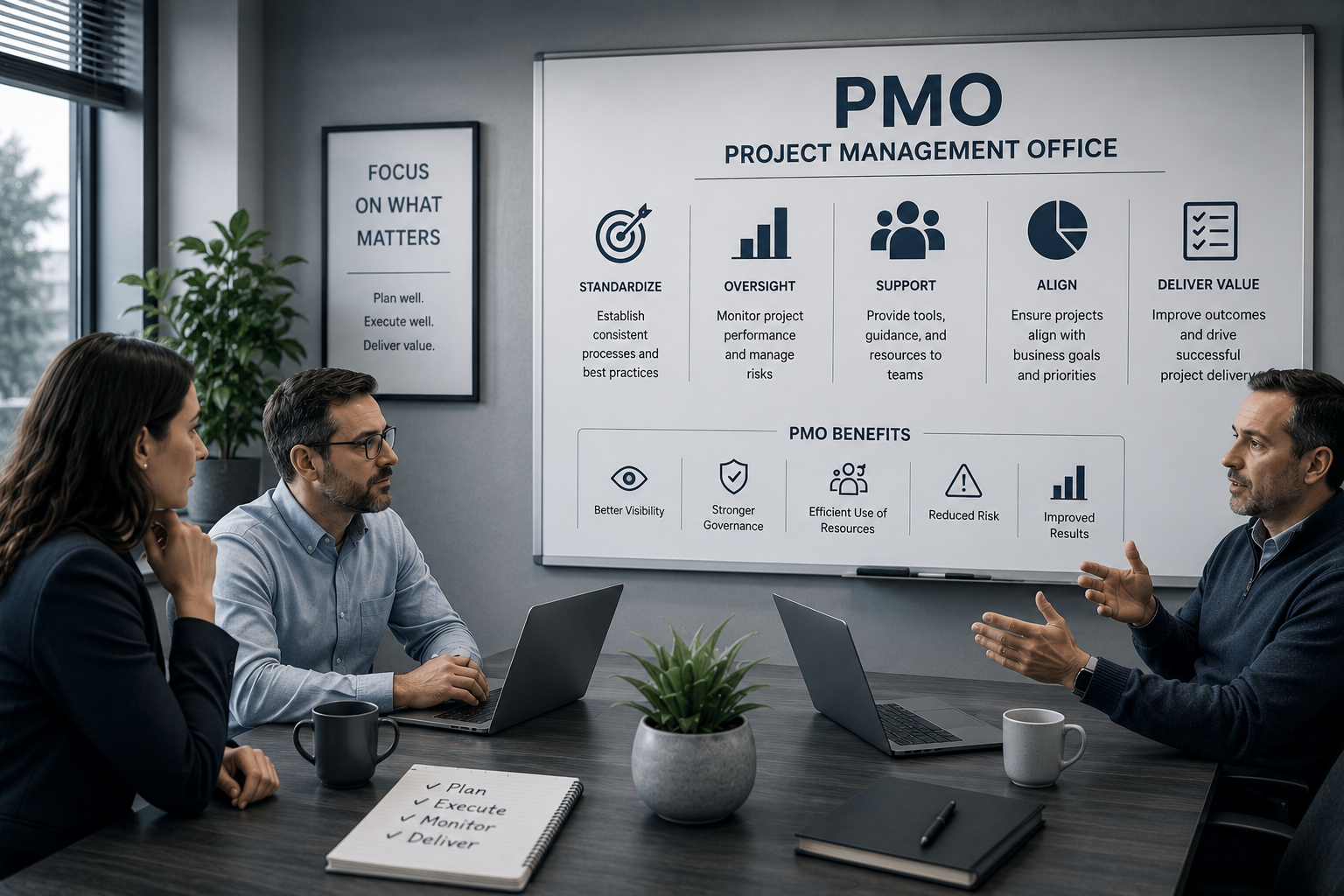
What Is a PMO?
You may have heard the term “PMO” during conversations about large projects or digital transformation. But what does a PMO actually do?
PMO stands for Project Management Office. At its simplest, a PMO helps an organization bring structure and consistency to the way projects are planned, managed, reported, and completed.
Imagine an organization has ten major projects underway. Each project has its own budget, timeline, team, risks, and priorities. Leadership needs more than individual project updates. They need to understand which projects are on track, where problems are developing, how resources are being used, and whether the work still supports the organization’s priorities.
That is where a PMO can help.
What Does a PMO Do?
A PMO creates a consistent approach to managing projects across an organization. Depending on the business, this may include project reporting, governance, risk management, budgeting, resource planning, project standards, and support for project managers.
A PMO also gives leadership a clearer view of what is happening across multiple projects. Instead of receiving different reports in different formats, decision makers can get reliable information that makes it easier to identify issues and decide where attention is needed.
Does Every Organization Need a PMO?
Not necessarily.
A smaller organization managing only a few projects may not need a formal PMO. But as the number, cost, and complexity of projects increase, keeping everything coordinated becomes more difficult.
A PMO can be particularly useful when projects regularly compete for the same people or budget, reporting is inconsistent, leadership has limited visibility, or important initiatives repeatedly experience delays.